Magia Gliny
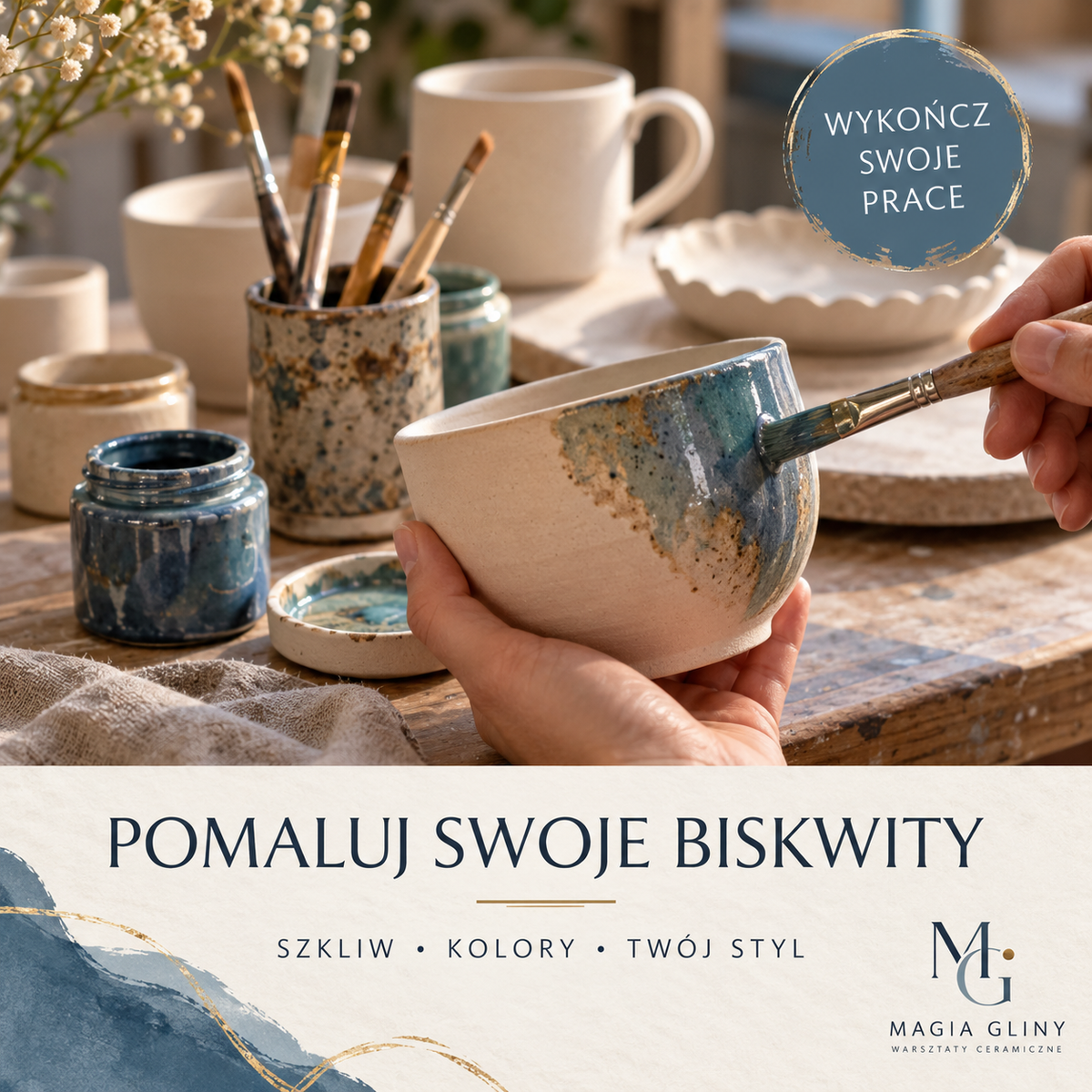
Bisque glazing - paint your works on the wheel or made at home.
Bisque glazing - paint your works on the wheel or made at home.
Couldn't load pickup availability
Have you made your pieces on a potter's wheel or at home and want to finish them functionally, but you don't yet have the skills or don't want to buy glazes?
Come to the studio and finish your work. You'll have the opportunity to explore a rich collection of glazes from brands such as AMACO, BOTZ, COLOROBIA, and SPECTRUM, as well as paints and engobes.
An instructor will be on-site to help you choose glazes for the appropriate firing temperature and advise you on the finishing method.
The price includes kiln firings.
187 PLN /kg of bisque
The cost of booking a spot is 20 PLN, which will be deducted from the total amount after weighing the pieces.
Appointments can be made on an ongoing basis.
Participants take home their self-made pieces, which must be collected within 30 days. Unclaimed pieces will be disposed of.
If you have any questions, please contact us at 517837790.
Ceramic and Bisque Glazing Process: Essence and Importance in Production
Glazing is a key process in the production of ceramics, which not only gives ceramic items an aesthetic appearance but also provides protection against external factors. This process involves covering dried ceramics with a transparent glaze or a colored glaze, which, after the first firing, transforms into a dense and durable glaze. There are several glazing methods, such as dipping, spraying, or pouring.
Important information about the ceramic and bisque glazing process:
- Suspensions: Glaze is created by mixing oxides with water or oil.
- Clays: Ceramic items must be thoroughly cleaned of grease and dust before glazing.
- Firing: After the ceramic is covered with glaze, the item undergoes a second firing.
- Methods: Glaze can be applied with a brush, by dipping, or by spraying under pressure.
- Final effect: The method of glaze application affects the final appearance of the ceramic product.
The glazing process requires precision and experience from ceramists. Avoiding errors is essential to achieve the desired final effect. It is also important to remember safety when working with ceramic materials - wearing protective eyewear is necessary. Thanks to proper glaze application, ceramics acquire a unique character, and the glazing process becomes a key stage in the production of high-quality ceramic ware.
Overview of different types of glazes used in the glazing process
Glazes are an extremely important element in the ceramic glazing process, not only giving items an aesthetic appearance but also providing protection and durability. There are many different types of glazes, each with unique properties and applications. One of the basic distinctions is between transparent and matte glazes.
Types of glazes:
- Transparent glazes: Clear glazes allow the natural color of the clay to show through, which is ideal for artistic ceramics.
- Matte glazes: Provide a delicate, velvety appearance, masking surface imperfections.
Glaze components:
- Glazes consist mainly of oxides, which give them color and chemical properties.
- Additionally, they may contain pigments, such as metal oxides, to achieve the desired color.
Properties and applications:
- Glazes form a protective layer on the ceramic surface, preventing moisture and dirt penetration.
- Thanks to the variety of colors and effects, glazes allow for the creation of unique patterns and decorations.
- Matte glazes give items an elegant look, ideal for design projects.
Thanks to the variety of glaze types and their properties, it is possible to match the appropriate kind to a specific ceramic project, allowing for the achievement of the intended aesthetic and functional effect.
Glazing process step by step
The ceramic glazing process involves several important stages, from preparing the mixture to final firing. First, the glaze is created by mixing powder with water until the desired consistency is achieved. Then, ceramic items are either dipped in the suspension or poured with glaze, which makes the covering layer glazed. After this process, the objects are left to dry, and then excess glaze is removed with a damp sponge to avoid undesirable effects during firing. During firing, the vessels are placed in a kiln and subjected to higher temperatures, which melts the glaze and forms a durable layer on the surface of the ceramic product. Proper glaze preparation is also essential to avoid too thick a layer or cracking during the process. Glaze application methods can vary depending on the artisan's experience – from dipping to pressure spraying or the oil method. The entire process requires precision and care to achieve the desired final effect.
Important considerations regarding the glazing process:
- Ceramic items must be thoroughly cleaned before dipping in glaze.
- Controlling the consistency of the suspension is crucial for even surface coverage.
- Careful removal of excess glaze helps prevent unsightly bubbles on the surface.
- Firing vessels at the correct temperature ensures the durability and aesthetics of the glaze.
- The artisan's experience influences the choice of glaze application method – dipping, pouring, or spraying.
The detailed ceramic glazing process involves many important steps, the correct execution of which is crucial for the final effect and durability of the ceramic product.
Share